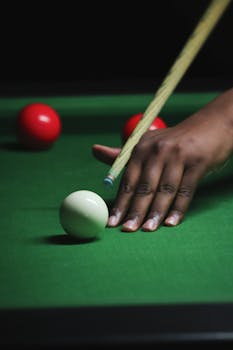
If you’ve lined up that crucial shot in 8 Ball Pool and watched it miss by an inch, you know aiming is art. Small adjustments make all the difference.
Players across all skill levels search for practical “8 ball pool aiming help” at some point. Sharpening your shot game and reading angles leads to real progress and more regular victories.
This guide unpacks the habits and tips that reliably boost accuracy, spin usage, and bank shot confidence. Dive in to pick up new tricks for your next match.
Reading Angles More Precisely Every Game
Perfecting angle judgment gives any player better “8 ball pool aiming help” than raw power ever can. Start by focusing on cue ball to object ball contact.
Learning the relationship between the cue and the target produces consistent shot lines. Imagine connecting invisible lines that show where the target ball will go after contact.
Visualize Trajectories Using Cue Alignment
Picture a line extending from your cue straight through the cue ball. Adjust so that the cue ball’s path, once struck, hits the object ball where you plan.
A great 8 ball pool aiming help tip is to pause before every shot and envision the imaginary “ghost ball” that mimics perfect contact.
Check that your arm, wrist, and cue maintain a straight line. Even small wrist tilts can throw off your angle, leading to missed shots or unlucky scratches.
Applying the Half-Ball Rule for Common Shots
The half-ball rule means hitting the object ball with the cue ball so exactly half is covered. The result: the object ball travels at nearly a 45-degree angle.
Experienced players say, “If I see half of the target ball from behind the cue, I’ll pocket it if my stroke is true.” Try this advice when breaking clustered balls apart.
Practicing this rule helps you memorize predictable outcomes for certain shots. Over time, your intuition becomes as valuable as visual markers or aim-assist guides.
| Angle Method | Situation | Execution Tip | Takeaway |
|---|---|---|---|
| Ghost Ball | Standard cut shots | Picture the cue replacing target | Improves consistent aiming |
| Half-Ball | 45-degree cut shots | Align cue for half overlap | Delivers repeating angle |
| Parallel Aiming | Thin cuts | Visualize tangent lines | Handles sharp-angled shots |
| Pivot Method | Banks, kick shots | Pivots around cue | Improves creative position play |
| Diamond System | Long bank shots | Use table markings | Boosts accuracy for banks |
Integrating Spin for Total Cue Ball Control
Adding spin transforms your 8 Ball Pool shots into advanced plays. Cue ball control separates wins from losses when the layout turns tricky.
Spin, or “English,” changes the cue ball’s behavior after contact and opens new position options. Real matchups reward players who practice control using “8 ball pool aiming help.”
Mastering Top Spin and Draw Shots
Top spin pushes the cue ball forward after contact, letting you chase into the table. For draw shots, aim low to drag back toward your shooting hand after the hit.
Stick with a smooth, medium-paced stroke on draw shots. Adding “8 ball pool aiming help” here means steady aim, level cues, and practicing on slower tables.
- Use top spin when re-positioning for the next shot; aim just above cue ball’s center, strike cleanly, and watch it follow the object ball through.
- Draw back for tough setups; cue below the center, keep the tip steady, and use a controlled follow-through so the cue ball spins backward, not sideways.
- Side spin lets you swerve around obstacles or widen/narrow rebound angles; hit left or right off-center with a gentle stroke for best results.
- Add spin only when confident where every ball will end up; reckless spin risks lost position and missed pots, so build habits slowly during practice.
- Combine top or draw with side spin for complex escapes: aim diagonally on the cue ball, visualize the new arc, and check your result after each session.
Trying these, players quickly see which spins pair best with specific angles and layouts. The phrase “8 ball pool aiming help” fits as these actions directly improve cue ball control skills.
Minimizing Miscues and Spin Errors
Stick to chalking before critical shots and clean your cue often for maximum friction; this prevents sudden slips or under-executed English.
- Chalk before all spun shots; even one dry tip can send the cue ball off course or cause a complete miss, leaving you defenseless next turn.
- Slow down complicated shots that require more than one spin; hesitation makes you check angles and reduces the odds of accidental double hits.
- Check your bridge and stance for stability. Shaky support or leaning too far off-center introduces unwanted angles, undermining any “8 ball pool aiming help” benefits.
- Test cue and tip regularly on practice shots; swap out warped tips, as those reduce consistency and make backspin, side, or top unreliable under match tension.
- Watch ball reaction: if the cue ball jumps or skids oddly after impact, adjust both force and cue-tip contact on the next shot for better results.
Stay calm and review your technique regularly. Reliable spin turns seemingly impossible positions into winning setups with smart 8 ball pool aiming help guidance.
Bank Shots and Kicks: Expanding Your Scoring Options
Bank and kick shots lift your 8 Ball Pool game when direct angles vanish. Treat banks as deliberate plays, not last resorts, and winning chances soar.
Using the Diamond System for Repeated Success
Picture the table as a grid where every diamond marker counts. Smart players count diamonds to plan cue ball and object ball paths precisely on banks and kicks.
Tagging “8 ball pool aiming help” into practice, players say aloud, “One diamond over, cue ball there, object ball to pocket.” Repeat aloud for precision-building.
Instead of random guessing, treat the wall as a real aiming partner. Use feedback from each shot, adjust angles, and note results for repeatable banks under pressure.
Practice Check: Feeling Comfortable with Table Sides
Spend five minutes during warm-up sending balls gently off rails without a target, just to sense angles and rebounds. Translate this skill under match conditions for better defense and offense.
For example, players say quietly, “I want the cue to travel parallel to the short rail, land here, rebound to the target ball.” Repeat to internalize bank-kick relationships.
“8 ball pool aiming help” through repetition makes banks and kicks part of your offensive plan, not accidental saviors.
Developing a Routine That Sharply Improves Accuracy
Building a shot routine increases reliability and minimizes stress. Repeating habits from setup to execution turns focus into wins, especially for those seeking next-level “8 ball pool aiming help.”
Small rituals center your attention. Before every shot, trace the cue line, check your body alignment, and rehearse the stroke once—or say a cue phrase like, “Straight and true.”
Checkpoints from Approach to Stroke
Approach from behind the cue ball, spot the intended contact, and commit to the line. This deliberate walk-up helps your brain lock in the shot, not just the cue.
Use a step sequence: walk up, pause, align the cue, gently backstroke, pause again, then commit. Break bad habits by counting these steps out loud as you rebuild routine.
Returning to setup when distracted stops rushed, poorly aimed shots. Every tournament player carries a backup plan: “If nervous, reset, deep breath, start over.”
Body Language and Confidence in Shot Execution
Confident players show upright posture and steady hands. Whether chatting or focused in silence, their movement is deliberate and free of hasty jitters.
Practice smiling or relaxed breathing before tough shots. Attitude shifts the 8 ball pool aiming help you get from muscle memory—positive thoughts reinforce muscle control.
After each successfully executed shot, nod or tap the table as a physical cue. This connects mental routine with physical results, instilling long-term shot confidence.
Adapting to Digital Table Differences and Interfaces
Online 8 Ball Pool games bring unique aiming challenges. Physics can differ from live tables, affecting how “8 ball pool aiming help” tips apply from game to game.
Use each match’s practice table or AI mode to test spins and rebounds. Focus on minor adjustments in force and spin to bridge digital and real technique.
Dialing Sensitivity and Aiming Tools for the App
Adjust app sensitivity controls to slow your cue movement; fine-tuning touch speed reveals the tiniest aiming differences useful for both touch and mouse controls.
Check calibrations every session. If shots consistently miss one direction, recalibrate the digital cue line to match your real world feel. This simple check heads off frustration.
Practice aiming with the app’s guide lines, but periodically switch them off. Developing natural visual judgment prepares you for higher-stress games without visible aim aids.
Adjusting for Ball Physics Changes
Note if ball speed, spin, and rebound don’t mimic real life. Announce aloud: “Less force for banks, softer side spin,” and adjust until your reactions match the in-game outcomes.
Returning to core tips applied on digital tables keeps your “8 ball pool aiming help” muscle memory sharp. Frequent, mindful reps translate into more wins, even against new opponents.
Players who shift between different platforms quickly spot what transfers and what needs practice. If one game differs, jot notes after each session for rapid adaptation.
Fine-Tuning Under Pressure: Clutch Play Habits
Consistency in closing out games reflects your preparation level. Building pressure-tested habits with “8 ball pool aiming help” tricks offers the mental edge in sudden-death moments.
Develop calming scripts. Quietly repeat, “All clear, cue straight, follow through,” as you settle in for last shots. This centers your cue arm and helps block distractions around you.
Isolating Yourself from Distractions
For tournaments or intense rounds, control your environment. Mute chat, ignore the crowd, or focus on the table’s felt texture to drown out noise and regain composure.
Quickly refocusing means you won’t drop easy shots under pressure. Create a signal like gripping your cue and looking twice at your target. This cuts outside influence fast.
After stressful turns, take a deep breath. Shake your shoulders, roll your wrists, and say, “Ready again.” Reset so each shot gets equal focus, start to finish.
Post-Game Review for Rapid Learning
Finish each match by running through your memory: Which shots earned praise, which needed cleaner technique? Make a note or record a voice memo if an angle was new.
Immediate review is real “8 ball pool aiming help” because it connects game-day mistakes to training-table drills. Keep a running log for the next session’s warmup plan.
Players aiming for breakthroughs compare play clips: “This side spin worked—clip saved; this bank missed by an inch—practice again.” Each note tightens your closing ability next match.
Conclusion: Reliable Progress and More Confident Shots
Players improve with structured routines, careful angle work, and strong “8 ball pool aiming help” strategies. Each section’s tips offer steps and mindset shifts you can try right now.
Remembering to use deliberate spin, bank shot strategies, and regular post-game reviews lets you adjust quickly and claim more wins, match after match.
Practicing these concrete habits builds not only skill but also confidence. Soon, you’ll trust your aim in tournament showdowns and online battles alike.

